What is Ayurveda?

The body and mind are interconnected and constantly influence each other. Emotional stress, for example, can cause physical symptoms such as headaches or digestive problems, while physical pain can exacerbate emotional tension. As we are increasingly dominated by fast-paced living and stress in our lives nowadays, many people are turning more and more to a holistic approach to well-being, which addresses both the body and the mind. By treating both aspects of human well-being, we can gain a deeper understanding of the causes of health problems.

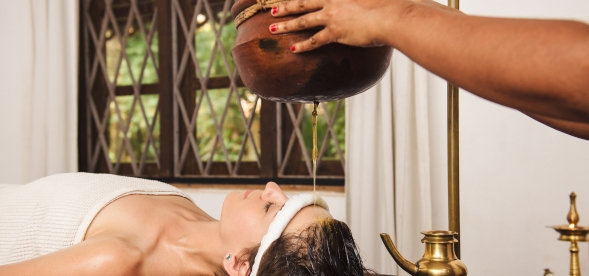
One such approach/method that is gaining popularity is Ayurveda. This is an ancient healing system that originated in India over 5000 years ago. Translated from Sanskrit, “Ayur” means life and “Veda” means knowledge. Ayurveda thus means the knowledge of life.

Although Ayurveda is not very well known in the Western world, it is the only non-allopathic medical system fully accepted and recognized by the World Health Organization (WHO). In other words, Ayurveda is the only alternative healing system recognized by the WHO. The recognition of Ayurveda by the WHO means that it is considered a valuable source/method of healthcare.

It is important to note, however, that recognition by the WHO does not necessarily mean that all aspects of Ayurveda have been scientifically proven or that it is considered a replacement for conventional medical treatments. Rather, it emphasizes the importance of preserving and integrating traditional medical practices into the broader healthcare system, especially in cultures where these practices are deeply rooted.

Meeting in the Middle
To get the best of both worlds, a collaboration between Eastern and Western medicine would be beneficial, in my opinion. Combining conventional Western medical approaches with complementary and alternative therapies, such as acupuncture, herbal medicine, and Ayurveda, is called Integrative Medicine. By integrating these approaches, patients can benefit from a wider range of treatments that address both physical and mental aspects of health.

Turning the Tide
As a skin therapist, I help people with skin problems achieve healthy, even skin. I’ve been doing this for 4 years. And in those 4 years, my biggest insight has been: skin problems often stem from stress. In such cases, an approach focused only on skincare and treatments is often not sufficient, and results lag behind. Much to the deep frustration of clients.

A holistic approach to (health) issues has caught my attention for years and has led me to decide to pursue basic training in Ayurveda. Perhaps this will enable me to inspire, inform, and provide tips and advice on a broader level!

Stay tuned!

Love, Fabienne

Do Jade Rollers Work?

Some of you may have known about this facial roller (Gua Sha Roller) for years (which doesn’t surprise me, given that this roller dates back to the 7th century), but I only discovered this fun tool a few months ago: “The facial roller – made of Jade or Rose Quartz (a gemstone) – is a tool that is supposed to have relaxing effects”. It was used as a beauty tool by empresses in China to maintain the youthfulness of the skin. I see the roller popping up more and more with trendy, natural cosmetic brands. Small disclaimer: I have never used the roller, I am very sceptical but at the same time a little curious about its effectiveness. That’s why I delved into it. Are you ready to see if this facial roller is worth trying?

The functionality of the roller
If we are to believe the internet, the stone helps to firm the skin through gentle massage movements. It also assists in supporting the lymphatic system, a system in our body that removes waste products. Jade works Physically strong cleansing, balances various bodily systems, and removes toxins from the body. It is said to help reduce stress and tension in the body.

The roller is said to be good for:

  • improving skin elasticity;
  • reducing puffiness and fine lines;
  • relaxing facial muscle tension;
  • helping products to absorb better.

How to use the roller?
After cleansing your face with a cleanser and toner, apply some facial oil to your face. The oil helps the facial roller to glide easily over the skin, while the roller will enhance the absorption of the facial oil and amplify its benefits. When you place the roller in the refrigerator before use, this should provide an extra cooling effect.

My conclusion
Based on my own pragmatic view, knowledge, and the information I have read, I have come to the following conclusion: I think the roller does have a relaxing effect, but more so due to the movement and pressure exerted on the skin. Through the massaging movements, waste products are flushed out, the skin becomes more supple, and blood circulation is stimulated. However, these are the proven benefits commonly known from a massage. Whether the effect of the stone add value to these positive effects? I leave that question open. Will I use this roller myself in the future? Yes, why not? I think it certainly can’t hurt, even if only for relaxation.

Where to buy?

Herbivore (€34,68)

Bol.com (verschillende aanbieders) 

Coucou Jade Roller (€35,-)

With love, Fabienne

Bron 1: Mens-en-gezondheid, 2018. Wat zijn de voordelen van massage voor de gezondheid?. Geraadpleegd op: https://mens-en-gezondheid.infonu.nl/beauty/109346-wat-zijn-de-voordelen-van-massage-voor-de-gezondheid.html

Bron 2: Herbivore, 2018. Jade Facial Roller. Geraadpleegd op: https://www.herbivorebotanicals.com/collections/all/products/new-jade-facial-roller

Are organic skincare products better for your skin?

The ingredients used in cosmetics can be either synthetic or natural. In short, synthetic ingredients are substances made by humans, while natural ingredients are derived from nature. Most natural cosmetics manufacturers share a philosophy that could be described as using the goodness of nature and/or producing with respect for nature. If I believe what I see on the internet, in stores, or on my Instagram feed, people are becoming increasingly aware of the ingredients in the products we apply in our daily skincare routines. Consequently, more and more blogs are emerging that provide advice and tips on how to create a completely healthy lifestyle. But do natural products really work that well? Many of these bloggers believe that natural cosmetics actually contribute to healthier skin, but unfortunately, for more than half of natural ingredients, this has not yet been scientifically proven. In fact, many products are sold with added natural ingredients that you might not want to apply, such as lavender or mint, which can actually be irritating. But that’s not the only concern.

The effectiveness of a good product depends on multiple factors, not just active ingredients. Effectiveness depends on the processing, shelf life, concentration, purity, and stability.

And this processing starts with the extraction of ingredients because an extract from a cucumber or an aloe vera plant doesn’t go directly into a jar. Even if the ingredient comes from nature and is effective, to what extent does a product still fulfill its promise after undergoing several processes before it can be sold? For example, green tea naturally has a brown color. When this ingredient is added to a cream, it can only be added in low concentrations, or else the cream will turn brown. But to be effective, a higher concentration is needed. However, a brown cream is unattractive to most people. Ultimately, natural products often contain synthetic ingredients as well, which are often needed to maintain stability.

But don’t get me wrong, I’m not against natural products. Ingredients that have been proven to have a positive contribution include oatmeal, (manuka) honey, coconut oil, green tea, and soy. If they meet all the above conditions and provided you don’t have pre-existing skin problems, why not? Ultimately, it’s important that products contain ingredients that are safe, whether synthetic or natural. And when you combine the right ingredients from both sides, it’s ultimately about the right composition and stability. So… it all comes down to finding the right balance. 😉

If you want to know how the use of ingredients in cosmetics is legally regulated within Europe, you can check out https://ec.europa.eu/growth/sectors/cosmetics/cosing_en

With love, Fabienne

Sources
bron 1: Nederlandse Cosmetica Vereniging (2019). Natuurlijke Cosmetica. Geraadpleegd op: https://www.ncv-cosmetica.nl/cosmetica/natuurlijke-cosmetica/

https://www.degroenedrogist.nl/nl/service/certificates/

veganistische huidverzorging

Wanneer je vegetarisch bent eet je geen vlees, gevogelte of vis. Als je veganist bent, eet of gebruik je geen enkele producten die van dieren afkomstig zijn. Eieren, melk, honing, vlees en vis staan dus niet op het boodschappenlijstje van een veganist. Wat mij het afgelopen jaar is opgevallen is dat er dan ook steeds meer veganistische huidverzorgings- en make-up producten op de markt verschijnen. Voordat we daar verder op ingaan wil ik eerst meer vertellen over het veganisme om het verhaal rond te maken.

Waarom Vegan Lifestyle?
Vaak zie je de aspecten “mens, dier, milieu en gezondheid” op meerdere websites positief beargumenteerd worden hoe het veganisme hier aan kan bijdragen. Veganisten willen eigenlijk een statement maken over het huidige wereldsysteem waarin dieren gezien worden als een product. Ze willen niet bijdragen aan het dierenleed, waarmee tegelijk – onder andere – enorm veel water en massaproductie wordt bespaard. Het eetpatroon bestaat voornamelijk uit groenten, fruit en alles wat plantaardig is.

Welke dierlijke producten zitten er niet in vegan producten?
Je kan denken aan ingrediënten zoals:

  • bijenwas: geproduceerd door bijen en wordt vaak verwerkt in balsems;
  • collageen: lijmvormend eiwit uit de botten, graten en huid van dieren;
  • elastine: elastisch proteïne in bindweefsel. Onder andere van koeien;
  • hyaluronzuur: keten van disacharide uit bindweefsel van huid en gewrichten;
  • wolvet/lanoline: vettige talg uit schapenwol en werkt vochtvasthoudend (Schoofs. M., 2019)

… om maar enkele bekende voorbeelden te noemen. De ingrediënten die vaak wél overblijven zijn vaak plantaardige en/of biologische stoffen. Bij vegan beauty producten gaat het er vooral om dat er geen dierenleed in verwerkt zit. Maar dat wil nog niet zeggen dat dat beter is. Stoffen uit de natuur hebben zeker goede eigenschappen maar kunnen juist ook een keerzijde hebben en irriterend werken (NCV, 2019). De werkzaamheid is afhankelijk van het verwerkingsproces, de houdbaarheid, de concentratie, de zuiverheid en de stabiliteit. Meer over natuurlijke huidverzorging klik hier.

Mijn conclusie: is vegan beter?
Of veganistische huidproducten beter zijn of niet is natuurlijk een hele brede vraag. Maar wél een vraag die veel gesteld wordt. Beter in wat? Beter voor dier en milieu? Ja, waarschijnlijk wel. Maar beter voor onze huid? Dat ligt er natuurlijk maar net aan wat voor huidtype je hebt en wat voor zorg je huid vraagt en nodig heeft. Zoals ik al eerder probeerde duidelijk te maken is het veganisme een lifestyle waarbij meerdere factoren aan bijdragen. Veganisten vinden het vooral belangrijk dat er zo min mogelijk ‘’schade’’ aangericht wordt met hun aankopen. Het is maar net wat jij belangrijk vindt en dat uitgangspunt is voor veel mensen verschillend.
Bijvoorbeeld; in veel steden is een zeepwinkel die je van veraf al ruiken kan. Ze verkopen veel bruisballen, zeepjes en shampoo’s. Een heel groot deel van hun producten verkopen ze niet in de verpakking, want zij zijn ervan overtuigd dat dat is onnodig productiemateriaal is en daardoor slecht voor het milieu. En dat is prima natuurlijk, maar dat wilt nog niet zeggen dat het product zelf ook heel erg goed voor je huid zal werken.

Als je meer wilt weten over het veganisme (met name op voeding) raad ik de documentaire ‘’What The Health” op Netflix aan. Toen deze docu werd uitgebracht was dit écht het gesprek van de dag  en leek het of mensen van de een op andere dag hun leven om probeerde te gooien. Ik kan het alleen niet laten om te zeggen dat een docu geen docu is waarin de makers de kijkers niet proberen te shockeren en bepaalde boodschap heel duidelijk willen overbrengen. Deze documentairemakers vind ik persoonlijk erg zwart-wit denken: of je wordt veganist waardoor je bijna niet meer ziek word en een lang leven zal hebben en de wereld een stuk mooier zal maken… of je blijft leven zoals je altijd al geleefd heb en sterft voor je 50e…
De rest van de interpretatie laat ik aan jullie verder over. Ik ben zeker niet tegen een vegan lifestyle, want ik denk echt wel dat er er veel goede argumenten zijn om deze lifestyle na te streven.

En je hoeft natuurlijk geen vegan te zijn om vegan huid- en make-up producten te kopen, want zo zwart-wit ligt het natuurlijk niet. 😉 Het is maar net wat je fijn vindt om te gebruiken. Voor ieder wat wils tegenwoordig.

Liefs Fabienne

bronnen:
Schoofs. M., (2019) Dierlijke ingrediënten in cosmetica: wat, waarom & hoe anders?  Geraadpleegd op: https://www.enjoytheveganmovement.nl/blog/dierlijke-ingredienten-in-cosmetica-wat-waarom-hoe-anders/

Nederlandse Cosmetica Vereniging (2019). Natuurlijke Cosmetica. Geraadpleegd op: https://www.ncv-cosmetica.nl/cosmetica/natuurlijke-cosmetica/

balanceren van je hormonen na het stoppen van de pil

Veel vrouwen stoppen met de pil omdat ze zwanger willen worden. Wellicht goed om dit artikel te lezen wat ‘’ontpillen’’ doet met je lichaam. Ik heb zelf ontzettende rugpijn gehad toen ik ging stoppen met de pil en daar bleef het ook bij gelukkig. Maar sommige vrouwen krijgen erg last van puistjes. En omdat dit een huidblog is, wil ik deze bijwerking hier bespreken.

De pil en hormonen, hoe werkt dit?
De pil bevat hormonen. Hormonen zijn stofjes die je lichaam zelf aanmaakt en allerlei functies van je lichaam regelen en processen beïnvloeden (1). Zo ook de talgklieren in onze huid. Wanneer de talgklieren overmatig talg gaan produceren én daarbij ook bepaalde bacteriën komen kijken veroorzaakt dit een puistje. Niet alléén anticonceptie kan een reden zijn om te beginnen met de pil, maar de pil wordt ook vaak voorgeschreven bij acne. Sommige vormen van anticonceptie bevatten hormonen die de talgklier productie juist afremmen. Wanneer je deze pil een paar jaar gebruikt heb en je besluit om te stoppen is de kans groot dat je lichaam ‘’ontregeld’’ wordt, zo oom je talgklier productie.

Na het eerste halfjaar vinden de meeste vrouwen hun normale menstruatiecyclus weer terug.

Puistjes na het stoppen van de pil
Na het stoppen van de pil is je lichaam ontregeld. Sommige vrouwen zeggen dat ze écht moeten ontpillen en dat hun lichaam weer terug ging in de puberteit stand. Dit kan 6 maanden duren. Na het eerste halfjaar vinden de meeste vrouwen hun normale menstruatiecyclus weer terug (2). Dus hopelijk dat je huid ook na een halfjaar weer rustiger wordt. Voor in de tussentijd heb ik nog wat tips voor je.

Wat kan je doen?

  • Verzorg je huid zorgvuldig met producten die actieve werkstoffen bevatten. Reinig je huid in de avond, eventueel ook in de ochtend. Gebruik een exfoliant die salicylzuur bevat. Salicylzuur is een bewezen werkende stof die in staat is om talg tot diep in de porie op te lossen (3). Klik hier om te kijken welke producten passen bij een vette huid.
  • Probeer enkele weken géén zuivelproducten te consumeren. Uit onderzoeken blijkt dat zuivel een veroorzaker kan zijn van acne omdat zuivel hormonen bevat die de talgproductie stimuleren (4). Dus ik zou zeggen, vervang je dagelijkse zuivel voor Haver- of Soyamelk en kijk wat er gebeurd.
  • Probeer stress ook te vermijden.
  • En dan misschien wel de belangrijkste tip: ga langs bij een huidtherapeut! Huidtherapeuten bieden behandelingen aan tegen acne. Dit kan bijvoorbeeld een peeling zijn. Acne in het gelaat wordt trouwens door de meeste verzekeraars gewoon vergoed! Kijk dit dus even goed na want dit kan je flink wat geld schelen in de portemonnee. Ook is er géén doorverwijzing nodig om een huidtherapeut te bezoeken. Klik hier om een huidtherapeut bij jou in de buurt te vinden.

Succes!

Liefs, Fabienne

Bronnen:
1: (gezondheidsplein, 2019). https://www.gezondheidsplein.nl/menselijk-lichaam/hormonen/item45087

2: (mens-en-gezondheid, 2019)
https://mens-en-gezondheid.infonu.nl/zwangerschap/83836-zwanger-of-ontpillen-klachten-en-symptomen.html

3: (apotheek.nl, 2019)
https://www.apotheek.nl/medicijnen/salicylzuur-bij-huidaandoeningen?product=salicylzuur-gel-6-fna

4: (mens-en-gezondheid, 2019)
https://mens-en-gezondheid.infonu.nl/aandoeningen/80381-meer-kans-op-puistjes-door-het-drinken-van-melk.html

This site is registered on Toolset.com as a development site.