How Meditation, Nutrition, and Yoga Can Revitalize Your Skin and Improve Health

In a society where everything moves quickly, we also want to see fast results. When we have a headache, we quickly reach for paracetamol, while a headache usually wants to tell you that you might have taken on too much in the last few days and that you need to slow down. The “pressure” literally becomes too high.

To speak from my own experience, this is often the case with skin problems as well. From my experience as a skin therapist, I can say that many issues ultimately stem from stress, which is often chronic. It also makes it clear that skin problems often reflect what is happening in our bodies and mind.

Coping behaviour can be a result of stress on the body. Think about smoking, drinking alcohol in various amounts, poor nutrition, picking at the skin, or scratching/pinching. This is often unconscious behaviour. Many people do not connect their old habits to current complaints because they have “always done it this way.” The body can give signals for years that we ignore until it manifests in a way we can no longer overlook. Often, I see fatigue accompany skin issues, as well as digestive problems, emotional issues, weight changes, palpitations, or breathing problems. Unfortunately, this is often seen as normal. But these are precisely the signals your body is sending you. We have simply forgotten how to feel or listen to these signals.

As I mentioned at the beginning of my article, we live in a society where we just want a cream or a pill for the aforementioned complaints and skin problems. Of course, this can make a difference, but often these are short-term solutions.

Therefore, I want to inspire you towards a long-term solution. So, let’s start at the beginning. It’s time to turn inward again, go back to basics, and learn to listen to the signals from our bodies. But be aware, that this is not a quick fix. This requires discipline, awareness, and a lifestyle change.

  1. Meditation
    Many people are unaware of their feelings and thoughts, especially in our busy society. Meditating for 10 to 20 minutes daily provides the opportunity to pause and turn inward. This allows you to observe your thoughts and emotions without reacting immediately, leading to greater self-knowledge and inner peace. Meditation creates space for self-reflection, reduces stress, and helps you view situations from a distance. This results in clarity, enabling you to make more conscious, healthier choices in daily life.

Everyone nowadays has a Spotify account filled with guided meditations. Find someone you connect with and whose voice you enjoy. I find the meditations by Michael Pilarzich very pleasant; give it a try if you don’t know where to start.

  1. Nutrition
    What I often hear in practice is, “Yes, but I eat healthily.” My first question is, “What is your definition of healthy eating?” This can vary from person to person. Furthermore, I don’t believe in a single dietary pattern that is universally healthy for everyone. This perspective is more aligned with Ayurveda and orthomolecular therapy. Here are a few practical tips for a good start:
  • Eliminate soft drinks from your daily routine. Alcohol too, of course. 😉
  • Plan and prepare your meals.
  • No more processed or packaged snacks. Make your own instead!
  • Start your day with a healthy breakfast; this ensures a good start. People are often more motivated to choose other meals and snacks more consciously afterwards.
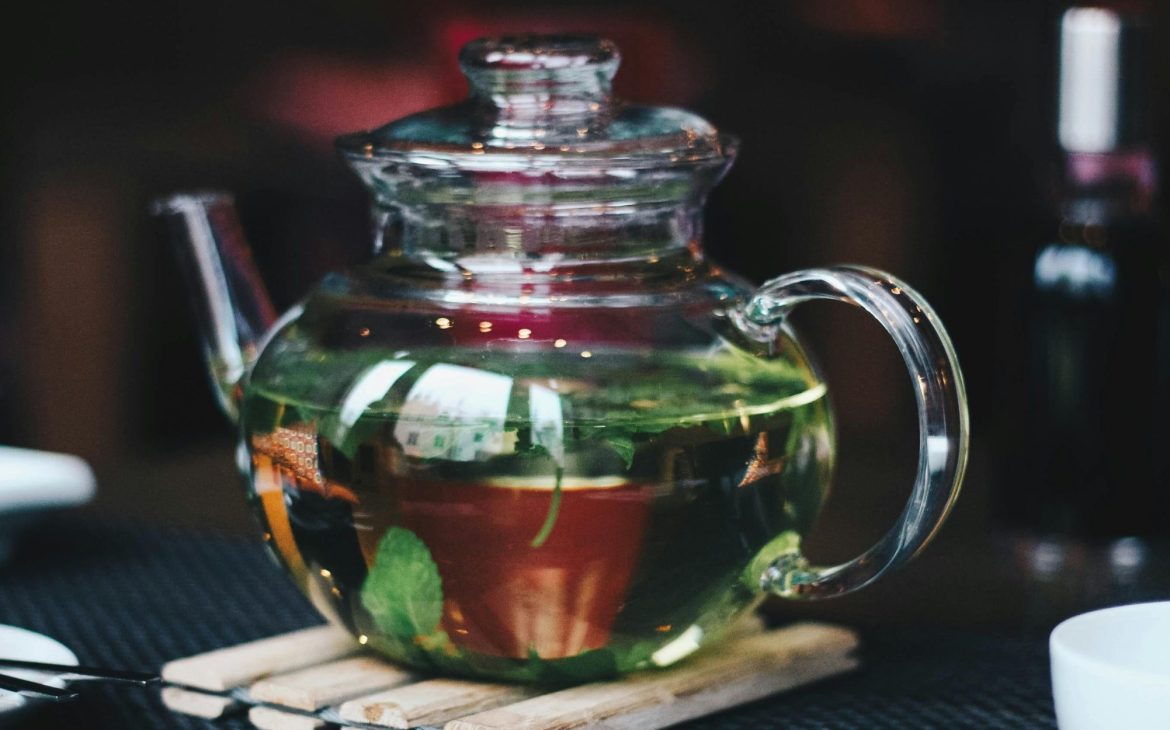
  • Opt for lavender tea, chamomile tea, mint tea or ginger tea.
  1. Sleep
    Implement an improved sleep pattern. I don’t need to explain that sleep is essential for the recovery of body and mind. A lack of sleep can affect not only your energy levels but also your skin, hormones, and mental clarity.
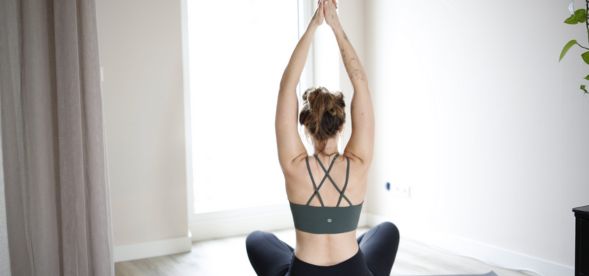
  2. (Yin) Yoga!
    You might be thinking: “What will body poses do for my skin?” Well, yoga has a rejuvenating effect on your body. This has to do with fascia. Fascia, the connective tissue that surrounds muscles, organs, and other structures in the body, plays an important role in Yin Yoga and can have a rejuvenating effect on both body and mind. By providing prolonged stretching and relaxation during Yin Yoga, flexibility increases and muscle tension decreases. This improves circulation, allowing oxygen and nutrients to be transported better to the cells, resulting in a healthier and more youthful appearance. Moreover, the calming nature of Yin Yoga helps to reduce stress, contributes to better mental and emotional well-being, and fosters a deeper connection between body and mind.

You can easily start a Yin Yoga class by playing a YouTube video at home. Starting doesn’t have to be difficult. Motivate and discipline yourself in this. However, nothing beats attending a yoga class in a pleasant space, where you are personally guided by an instructor. He or she can also correct you so you know you’re in the right pose.

I hope this article has provided you with some insight into finding balance, peace, and routine in daily life. You could say this is a beautiful beginning to returning to yourself. However, often you need to make a complete 360-degree turn. Learn to evaluate your relationships, for example. Are the people you interact with daily good for you? Do they give you energy, or do they drain it? Also, think about your job. Do you go to work every day with joy? Or is it time for something new?

If you do what you have always done, you will get what you have always gotten. And with that, I will conclude the article.

Namaste, dear all!
The Brain-Skin Connection: how does stress affect skin health?

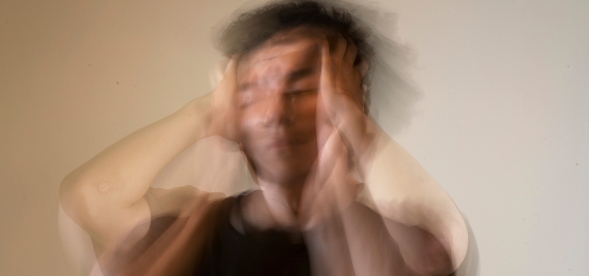
Have you ever experienced a period or moment when your skin reveals that your body is under stress? For instance, by developing a pimple, or after a long stressful period, you look in the mirror one day and think, “Why do I look older?.” Curious about how this happens and how you can prevent it? Let’s find out how we can stay young and youthful!

Stress is a biologically generated reaction to potential danger. The fight-or-flight response is a defence mechanism that occurs when the brain detects acute danger. This can cause intense feelings of anxiety or stress, prompting the body to prepare to either fight or flight. During this dilemma, numerous stress hormones surge through the body to provide you with more oxygen and strength to run away from the danger or confront it.

When we give an important presentation, get stuck in traffic, or worry about the latest news, a form of stress is internalized. And this all begins in the brain. The hypothalamus, the part that controls your hormones, releases the so-called “adrenocorticotropic hormone” during times of stress. This triggers the pituitary gland, a pea-sized gland located at the base of the brain, behind the nose and sinuses. This gland then releases adrenocorticotropic hormone (ACTH) and stimulates the adrenal glands to produce the stress hormone ‘’cortisol’’. Cortisol is the primary stress hormone, and fortunately so, because this hormone helps you significantly when you need to quickly run away from a threatening situation.

However, when you produce cortisol and this hormone is not used for its intended purpose (fighting, flight, etc.), this accumulation negatively affects the body’s well-being. A buildup of stress hormones causes an inflammatory response in the body. This suppresses the immune system, making you more susceptible to infections from acne-causing bacteria, and there is also a chance that the skin’s oil production increases.

These two factors are the perfect combination for causing skin inflammation, a so-called pimple or acne.

Additionally, cortisol is responsible for the production of sebum in the skin. When there is too much sebum, it can combine with dead skin cells to create a white bump, known as a comedone. This white bump traps P. acnes bacteria, allowing them to thrive. In this way, you create a perfect living environment for bacteria, resulting in a pimple or acne.

It’s difficult to avoid stressful situations. As mentioned earlier, we occasionally get stuck in traffic or have to engage in an important conversation at work that brings some form of stress. These situations are unavoidable, but we can try to change our reaction to them so that cortisol production doesn’t become excessively high. We know now that cortisol gives you the strength to move forward, to fight or flight. You can also make good use of this strength by practising a sport. Sometimes you just need to vent your anger or frustration, and a popular way to do this is boxing. Many people find relief in literally punching out all their strength and anger, which helps them to then put situations into perspective.

Furthermore, I want to briefly mention that your coping strategy (the way you react to a situation) in response to stress can indirectly have a negative effect on your skin. Think, for example, of scratching the skin, biting, or picking. Additionally, behaviors and lifestyle habits such as drinking alcohol, smoking, or eating unhealthily in large quantities also negatively impact the skin.

I could list many more solutions for dealing with stress, but the moral of this story is to make you aware that stressful situations do indeed impact our well-being. Find a method that works for you to cope with stressful situations. For instance, you could consider meditation or yoga. Both are proven methods for relieving stress.

Good Luck, and feel free to ask.

With love, Fabienne

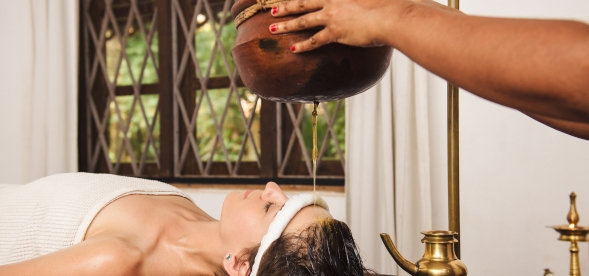
What is Ayurveda?

The body and mind are interconnected and constantly influence each other. Emotional stress, for example, can cause physical symptoms such as headaches or digestive problems, while physical pain can exacerbate emotional tension. As we are increasingly dominated by fast-paced living and stress in our lives nowadays, many people are turning more and more to a holistic approach to well-being, which addresses both the body and the mind. By treating both aspects of human well-being, we can gain a deeper understanding of the causes of health problems.

One such approach/method that is gaining popularity is Ayurveda. This is an ancient healing system that originated in India over 5000 years ago. Translated from Sanskrit, “Ayur” means life and “Veda” means knowledge. Ayurveda thus means the knowledge of life.

Although Ayurveda is not very well known in the Western world, it is the only non-allopathic medical system fully accepted and recognized by the World Health Organization (WHO). In other words, Ayurveda is the only alternative healing system recognized by the WHO. The recognition of Ayurveda by the WHO means that it is considered a valuable source/method of healthcare.

It is important to note, however, that recognition by the WHO does not necessarily mean that all aspects of Ayurveda have been scientifically proven or that it is considered a replacement for conventional medical treatments. Rather, it emphasizes the importance of preserving and integrating traditional medical practices into the broader healthcare system, especially in cultures where these practices are deeply rooted.

Meeting in the Middle
To get the best of both worlds, a collaboration between Eastern and Western medicine would be beneficial, in my opinion. Combining conventional Western medical approaches with complementary and alternative therapies, such as acupuncture, herbal medicine, and Ayurveda, is called Integrative Medicine. By integrating these approaches, patients can benefit from a wider range of treatments that address both physical and mental aspects of health.

Turning the Tide
As a skin therapist, I help people with skin problems achieve healthy, even skin. I’ve been doing this for 4 years. And in those 4 years, my biggest insight has been: skin problems often stem from stress. In such cases, an approach focused only on skincare and treatments is often not sufficient, and results lag behind. Much to the deep frustration of clients.

A holistic approach to (health) issues has caught my attention for years and has led me to decide to pursue basic training in Ayurveda. Perhaps this will enable me to inspire, inform, and provide tips and advice on a broader level!

Stay tuned!

Love, Fabienne

This site is registered on Toolset.com as a development site.